Big Fun Has Arrived in New Zealand All The Way From Australia
iscover distinctive, commercial-grade inflatables built for unforgettable events.

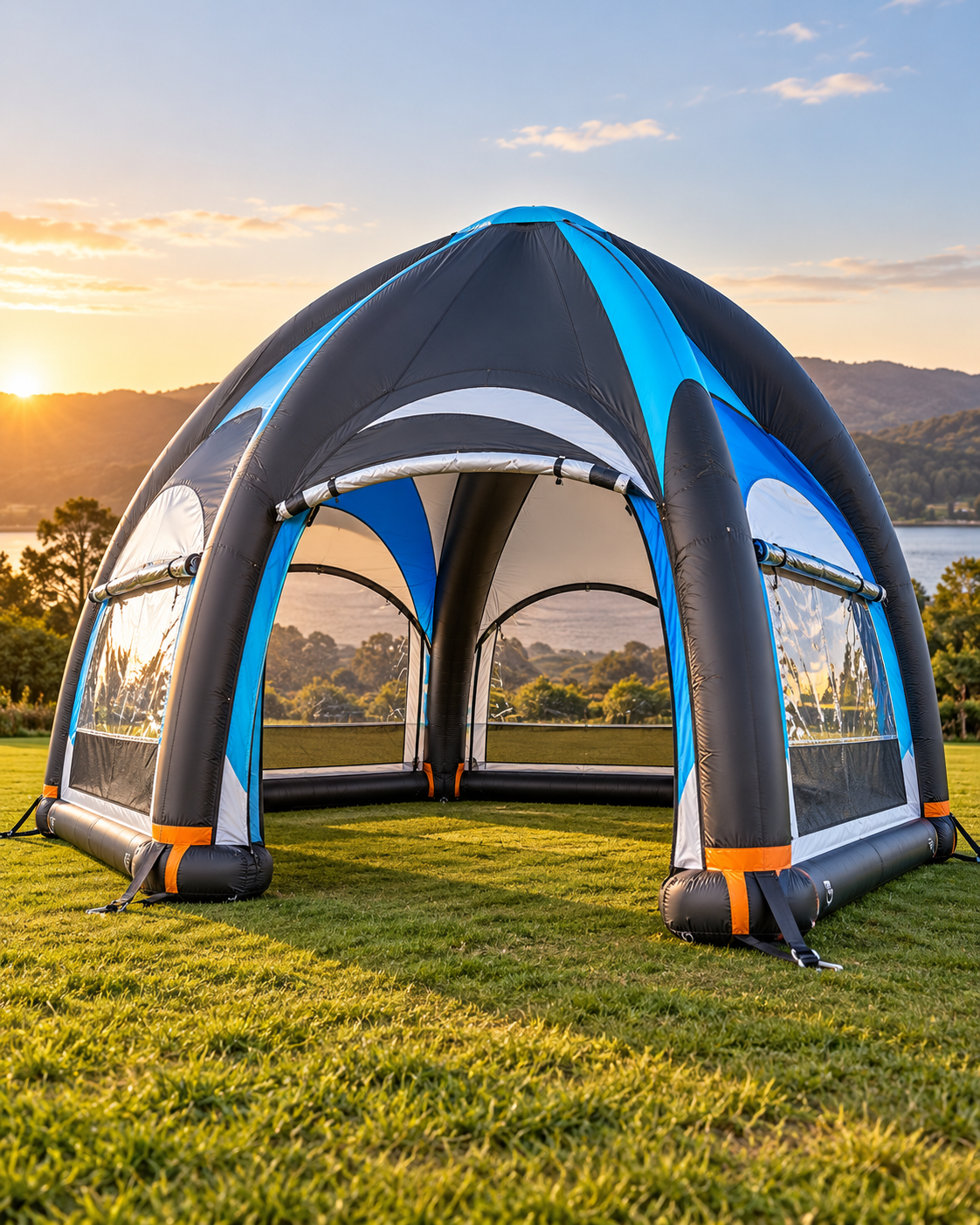
If you’ve spent any time organising a summer event in New Zealand, you’ll be intimately familiar with the traditional marquee wrestle. You know the drill: half a dozen mates, a pile of heavy steel poles that look identical, a massive sheet of stubborn canvas, and at least one person shouting, “Nah, mate, the corner bracket goes there!” Add a blustery afternoon in Wellington or a sweltering Hawke’s Bay morning to the mix, and setting up shade can quickly become the most stressful part of any gathering.
But over the last few years, the landscape of Kiwi outdoor events from massive music festivals to the humble backyard barbie has been quietly shifting. The culprit? The inflatable tent.
Once relegated to the realm of novelty camping gear or bouncy castles, inflatable architecture has grown up. Today, air-frame tents and inflatable marquees are rapidly becoming the go-to solution for event organisers and whānau alike. As an outdoor events specialist who has spent more than a decade navigating Aotearoa’s unique (and often unforgiving) climate, I can tell you that this isn’t just a fleeting trend. It’s a complete rethink of how we do outdoor shelter.
To understand why these structures are taking over, you first need to understand how they work. Traditional tents and marquees rely on a rigid skeleton usually steel, aluminium, or fibreglass to hold a fabric skin under tension. Inflatable tents chuck this concept out the window entirely.
Instead of solid poles, these tents utilise highly durable thermoplastic polyurethane (TPU) or heavy-duty PVC bladders encased in protective sleeves. When hooked up to an electric or manual pump, these tubes inflate to a specific PSI, creating a rigid, incredibly strong “air frame.”
The genius lies in the simplicity. You unroll the tent, peg down the corners, attach a pump, and flip a switch. Within minutes (sometimes seconds, for smaller models), the structure literally raises itself from the ground. There’s no playing pick-up-sticks, no missing joints, and no pinched fingers. When the hui is over, you simply open the valves, let the air out, and roll it back into its bag. For commercial event managers and weekend warriors alike, the reduction in “pack-in” and “pack-out” time is nothing short of revolutionary.
Let’s talk about the elephant in the sky: the New Zealand sun. Thanks to the infamous ozone hole and our clean, unpolluted air, Aotearoa has some of the highest ultraviolet (UV) radiation levels in the world. During the peak of a Kiwi summer, the burn time can be less than ten minutes. Shade isn’t just a nice-to-have for comfort; it’s an absolute health and safety necessity.
Inflatable tents are stepping up as the ultimate “SunSmart” tool. High-quality inflatable shade structures are typically manufactured using advanced UPF50+ fabrics, which block out 98% of harmful UV rays.
We are seeing a massive uptake of these on our coastlines. If you stroll down Mount Maunganui or Piha beach on a Saturday in January, you’ll spot a scattering of inflatable shade domes. They’ve largely replaced those cheap pop-up gazebos that tend to buckle and snap at the first sign of a sea breeze. Families can throw an inflatable dome in the boot next to the chilly bin, pump it up on the sand in three minutes, and create a massive, safe, shaded footprint for the kids to play under all day.
Furthermore, schools and local councils are catching on. For school sports days and swimming carnivals, where hundreds of kids are exposed to the glare for hours, heavy-duty inflatable marquees provide instant, reliable shade stations that teachers can easily manage without needing to call in a team of tradies for assembly.
While shade is the practical driver, the entertainment value of inflatable tents is where things get truly creative. Because air-frame technology allows for almost any shape, we are seeing a massive departure from the boring, boxy white marquees of the past.
Kiwis love to entertain at home. Whether it’s a 21st birthday, a summer wedding, or a classic Christmas lunch on the lawn, the backyard is our premier venue. Inflatable structures, particularly modular domes and spider-tents (named for their multi-legged appearance), bring a distinctly modern, premium feel to a domestic setting.
They also solve a classic suburban problem: acoustics. Traditional canvas stretched tight over steel acts like a drum, bouncing noise around and amplifying the chatter (which the neighbours might not appreciate by midnight). The air-filled tubes and slightly softer tension of inflatable tents actually help to dampen and absorb sound, making for a much better acoustic environment when you’ve got a Spotify playlist humming and two dozen people having a yarn.
Step into the commercial space, and the inflatable revolution is even more apparent. Think about the summer food and wine festivals in Marlborough, or the craft beer events scattered across Wellington. Vendors are increasingly opting for custom-branded inflatable kiosks. They stand out visually, looking sleek and futuristic, and when the festival wraps up on Sunday night, the vendor can deflate their entire stall and have it packed in the back of a ute in ten minutes flat.
Then there’s the festival scene. At events like Rhythm and Vines or WOMAD, inflatable structures are being used as VIP lounges, merchandise tents, and even secondary music stages. Their cavernous, dome-like interiors naturally draw people in.
Perhaps the most brilliantly quirky adaptation to hit our shores recently is the “inflatable pub.” Yes, it’s exactly what it sounds like. Designed to look like a traditional British tavern or a rustic Kiwi woolshed on the outside complete with printed brickwork, fake chimneys, and fireplaces these massive inflatable structures can be erected in a paddock in Waikato or a park in Christchurch, instantly creating a themed, immersive entertainment venue for private hires. It is a brilliant bit of novelty that showcases just how versatile this technology has become.
Now, anyone who has lived in New Zealand knows that our weather is notoriously temperamental. You can experience four seasons in one day, and our wind funnelled through the Cook Strait or sweeping across the Canterbury Plains takes absolutely no prisoners.
A common, yet entirely misplaced, concern regarding inflatable tents is that they will simply blow away like a stray beach ball. In reality, a high-quality inflatable tent is often far superior to a traditional framed marquee in high winds.
Here is the science behind it: rigid poles have a breaking point. When a gale hits a steel-framed marquee, the wind loads immense pressure onto the rigid joints. If the wind is strong enough, those steel or aluminium poles will buckle, bend, or snap, utterly destroying the tent and creating a dangerous hazard.
Inflatable air frames, by contrast, are flexible. They are designed to absorb kinetic energy. When a massive gust of wind hits an inflatable dome, the air tubes simply flex and bow inward. Once the gust passes, the pneumatic pressure instantly pushes the frame back into its original shape. It’s the old engineering adage: that which bends does not break.
Of course, they still need to be properly anchored. In New Zealand, where the ground can range from rock-hard summer clay to soft coastal sand, correct tethering is vital. Event experts utilise a combination of heavy-duty steel ground pegs, thick guy ropes, and, where pegging isn’t possible (like on concrete plazas for inner-city brand activations), high-capacity water weights strapped to the base of the air legs. When properly secured, commercial-grade inflatable marquees can comfortably withstand wind gusts of up to 80km/h more than enough to handle a standard southerly buster.
We are a nation of people who love the outdoors, but we live in a country where the environment demands respect. The harshness of the sun and the unpredictability of the wind mean we need gear that works hard, but our relaxed, “she’ll be right” culture means we don’t want to spend hours doing back-breaking labour just to set up a party.
Inflatable tents perfectly bridge that gap. They offer robust, reliable UV shade and storm protection, wrapped up in a package that is incredibly fast to deploy and visually striking. From the rugged coastlines to the suburban backyards, and from grassroots school events to massive corporate festivals, these air-filled innovations have well and truly earned their place in the New Zealand summer toolkit.
The next time you’re at an outdoor gig or walking through a summer market, look past the classic white canvas. Chances are, you’ll see the sweeping curves of an air frame. And if you’re the one hosting the next whānau reunion, do your sanity a favour: leave the steel poles in the shed, and get yourself a pump.